
Filipino Culture
Rising Above the “Starbucks Saga,” Sparking National Conversation on Coffee, Culture, and Class
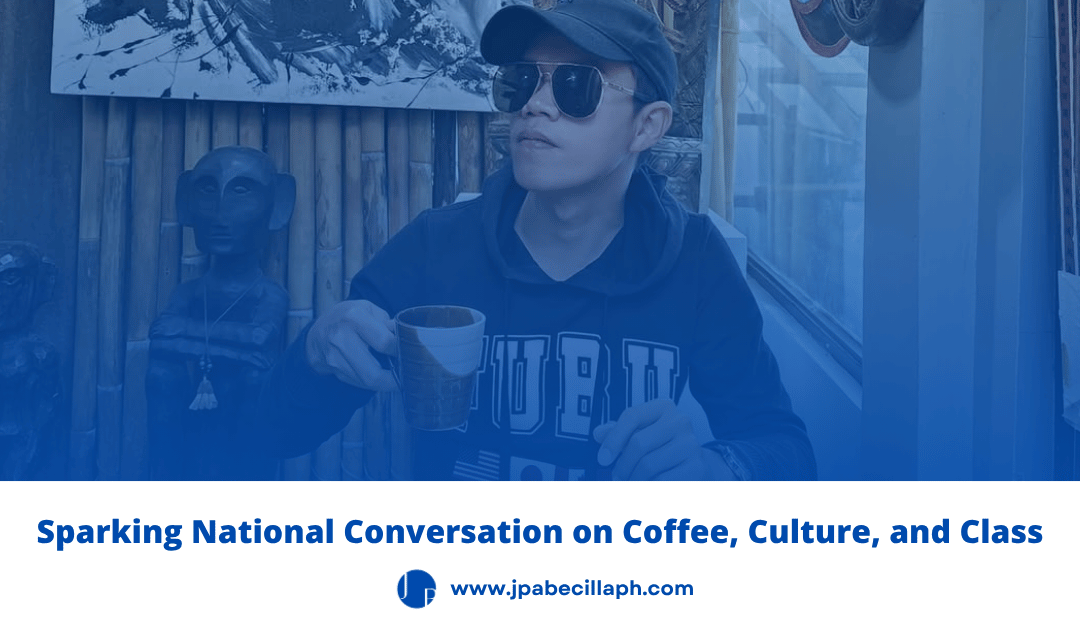
Months after the much-talked-about “JP Abecilla–Starbucks Saga,” digital marketing professional and blogger JP Abecilla, known as The Millennial Writer, is redefining the narrative, not with bitterness, but with depth.
Abecilla’s new viral Facebook post titled “What a Coffee Cup Reveals About Us” has once again captured public attention, amassing over 846 reactions, 262 shares, and 64 comments as of this writing. This time, the discussion moves beyond coffee cups to probe Filipino culture, social identity, branding, economic realities, and self-worth.
This renewed spotlight comes shortly after Media Meter Inc. named JPAbecillaPH.com one of the Top Lifestyle Websites in the Philippines, recognizing his growing influence in shaping meaningful conversations that blend lifestyle, marketing, and cultural insight.
From Controversy to Conversation
In June 2025, Abecilla’s earlier viral post ignited debate about class perception, customer service, and “social climbing” tied to Starbucks consumption in the Philippines.
Instead of fading into silence, Abecilla transformed the experience into a thoughtful dialogue on how marketing, lifestyle, branding, and authenticity intersect.
“Many people used to act like ‘loyal’ Starbucks customers when I went viral last June,” he shared in his recent post. “But when the topic hit a nerve, their real preferences came out. Authenticity always wins over appearances.”
The Coffee Debate That Became a Cultural Mirror
Triggered by Zac Alviz’s viral comparison of coffee prices between the Philippines and Australia, Abecilla’s response resonated across generations and social classes. The post inspired Filipinos to examine how coffee choices reflect economic realities and cultural priorities.
But behind the viral numbers is a story familiar to millions of ordinary Filipinos.
Coffee in the Philippines does not begin and end with a branded café. It can be the sachet of 3-in-1 coffee prepared before sunrise by someone getting ready for work. It can be a cup shared with family over pandesal at the breakfast table, brewed coffee from the province, or the instant coffee keeping an employee awake through another long shift.
For others, it is the café table where a freelancer opens a laptop, meets a client, finishes a deadline or simply finds a comfortable place to work for a few hours.
These different cups tell different Filipino stories, but none should determine who has greater worth.
That is what makes the conversation larger than Starbucks. A ₱200 or ₱300 cup can mean very different things depending on who is buying it. For one Filipino, it may be an ordinary convenience. For another, it may be a weekend reward after days of work. For someone earning close to minimum wage, it may represent a significant part of the day’s income. And for many households, the practical choice remains the familiar sachet of Kopiko or Nescafé waiting in the kitchen.
The viral discussion therefore became a window into everyday Filipino life: how we earn, spend, reward ourselves, project success and sometimes compare ourselves with others.
Coffee became the entry point, but the real conversation was about us.
Related post: From the JP Abecilla–Starbucks Saga to #ProudlyPinoyCoffee: A Journey of Brewing Filipino Pride
Filipinos Add Their Own Stories to the Conversation
The discussion did not produce a single view of what coffee means to Filipinos. Instead, the comments revealed how differently people experience the same cup.
“It was more a necessity back then than a luxury,” wrote Jay Ann Rose, referring to Starbucks’ early role as a workspace for professionals. “Coffee was linked to productivity and progress. But social media happened so…”
For Chris Lee, Starbucks isn’t about image at all: “You go there to work, not for bragging. I stay 2–3 hours doing creative work. I spend ₱500 but earn ₱5,000 for that work. That’s value.”
Meanwhile, Greg, now based in Germany, grounded the debate in financial literacy: “Let’s not compare too much—it kills joy. Don’t go broke trying to impress others. Be financially wise.”
Others defended simply buying the coffee they genuinely enjoy, while some argued that the original Philippines-Australia comparison needed more economic context.
Taken together, the comments reveal that there is no single “correct” Filipino coffee experience.
Some genuinely prefer Starbucks. Others see cafés as productive workspaces rather than status symbols. Some would rather drink inexpensive coffee and save the difference. Filipinos living overseas shared how even with higher incomes, buying premium coffee every day is not necessarily a financially sensible choice.
That diversity is precisely the point.
The Filipino story is not about telling someone drinking 3-in-1 that they should aspire to Starbucks, nor telling someone holding a Starbucks cup that they are automatically showing off.
It is about allowing people to live according to their circumstances without attaching human value to what they can afford.
A cup of coffee can be aspiration, comfort, convenience, livelihood, habit or reward.
Sometimes, it is simply coffee.
Redefining Filipino Pride Through Coffee
Abecilla’s message goes beyond the surface of coffee preference. It is about reclaiming Filipino authenticity in a culture often pressured by appearances.
“True Filipino culture celebrates connection, not class, not comparison, and definitely not coffee labels,” he wrote. “If a coffee brand can create walls between us, I’d rather support local Filipino coffee brands—those that represent pride, warmth, and community.”
There is also another story waiting inside the Filipino cup: our own coffee culture.
Long before international café brands became fixtures of malls and social media feeds, coffee was already part of Filipino homes and communities. The morning cup did not need a logo to have meaning.
What mattered was the conversation around the table, the hospitality offered to a visitor, the few quiet minutes before work, or the simple ritual of sharing something warm with another person.
Supporting Filipino coffee, therefore, does not have to mean rejecting international brands. It can mean rediscovering the value already present in our own communities and refusing to let consumption become a hierarchy of people.
For Abecilla, that is where a viral debate can become something more constructive.
Instead of asking, “What coffee can you afford?” perhaps Filipinos can ask what their choices reveal about the society they want to build—one obsessed with appearances and comparison, or one where people can aspire, enjoy and succeed without looking down on those whose lives and priorities are different.
Because perhaps the next great Filipino story does not always begin with something extraordinary.
Sometimes it begins before work, in a small kitchen, with hot water, a sachet of coffee and an ordinary Filipino preparing to face another day.
And whether that cup costs ₱10 or ₱300, the more important story has always been the person holding it.