
Society & Culture
Forgotten Island Review: A Filipino Millennial Looks Back at the ’90s, Friendship, and the Stories We Grew Up With
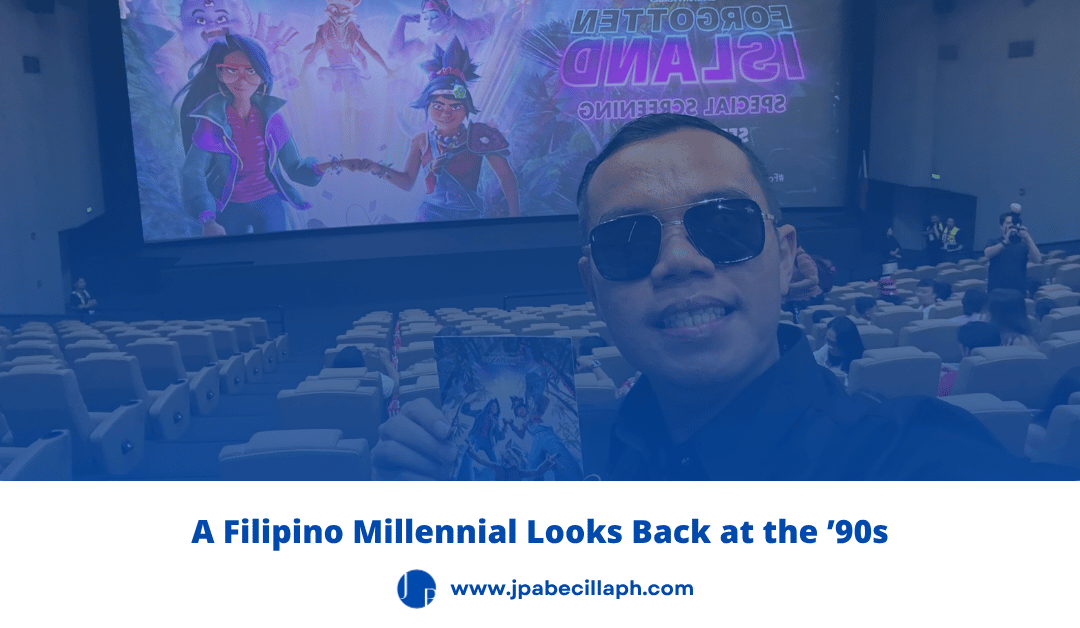
Disclosure: I was one of the invited guests of Universal Pictures Philippines for the advance special screening of DreamWorks Animation’s Forgotten Island. The invitation does not affect the opinions expressed in this review.
There are many reasons Filipinos will recognize themselves in Forgotten Island.
There is the jeepney. Karaoke. Lechon. Baybayin. The Philippine sun. The sarimanok. The manananggal. Even that very Filipino habit of pointing somewhere by simply pouting our lips.
But after watching the film, what stayed with me most was not simply seeing Filipino culture inside a major DreamWorks production. It was remembering.
I am a Filipino Millennial who grew up in the 1990s, the same decade in which the story takes place. And perhaps that gives me a different relationship with this film. I did not experience the ’90s through old photographs, VHS filters, or secondhand nostalgia. I was one of those children playing outside before smartphones became extensions of our hands.
And Forgotten Island made me wonder again: Whatever happened to the children I grew up with?
That, more than any mythical creature in Nakali, is what hit home.
A Filipino story told through a universal friendship
DreamWorks’ story follows lifelong best friends Jo, voiced by H.E.R., and Raissa, voiced by Liza Soberano. Raissa is preparing to leave the Philippines for the United States, forcing both of them to confront a truth that eventually reaches almost every childhood friendship: growing up does not necessarily mean growing in the same direction.
Their last adventure together takes them through a portal to Nakali, a fantastical island inhabited by creatures inspired by the Filipino stories they heard growing up. Escaping, however, comes with an extraordinary cost: the memories they have made together. That premise places friendship and memory, not mythology, at the emotional center of the movie.
That was the right decision.
Filipino mythology gives Forgotten Island its world, but friendship gives it its heart.
H.E.R. described memories as a kind of “love language,” adding that they help make us who we are. Soberano similarly said she hopes viewers will reconnect with their best friends and continue “the art of memory making.”
Those statements make even more sense after seeing the film.
The ’90s before we carried our lives inside our phones
One of the movie’s greatest strengths is its period setting.
Growing up in the ’90s, sentimental things mattered differently because we did not document everything.
A photograph was not one of 200 shots taken until we found the perfect one. Friendship bracelets, letters, toys, photographs, school memorabilia and seemingly useless little objects could become physical containers of memory.
Sometimes you kept something for years simply because someone gave it to you.
And because we did not have mobile phones constantly connecting us, ironically, I think we were often more connected to the people physically around us.
We played. We talked. We fought. We walked somewhere without sending live locations.
We disappeared from our parents for a few hours and came home carrying stories.
And memories became personal because not everything had photographic evidence.
The filmmakers deliberately leaned into their own 1990s memories. Filipino-American co-director Januel Mercado said that the decade was when he began connecting deeply with his family in the Philippines, while old family photo albums influenced the atmosphere of the film. “For the audience to feel this genuine sense of nostalgia, we tapped into our own experiences,” he explained.
That nostalgia certainly reached me.
Leaving also means leaving versions of ourselves behind
There is another reason Jo and Raissa’s story felt familiar.
I grew up partly in Pangasinan before leaving for Cebu in my late teenage years.
That move meant more than changing addresses.
I left old friends. Old food. An old language environment. Familiar places. Familiar faces. In some ways, I also left an old identity.
Anyone who has moved from a province to a major city, or from the Philippines to another country, probably understands that strange transformation.
Even celebrations feel different.
Growing up in a more remote community, a birthday could almost become a barangay celebration because practically everyone knew everyone. Neighbors were not simply people living beside you. They belonged to the landscape of your childhood.
Then life expands.
You meet new people. Speak differently. Work differently. Become interested in different things.
And sometimes we deliberately forget parts of ourselves because forgetting makes moving forward easier.
That is where Forgotten Island became much more meaningful to me than its fantasy premise initially suggested.
The question is not simply whether Jo and Raissa will remember each other.
It is whether growing up requires us to surrender the people we once were.
Co-director Joel Crawford described the movie as fundamentally being about two lifelong friends “growing apart,” while Mercado described Jo and Raissa as two unconventional puzzle pieces who somehow fit perfectly together.
By the end, I found myself thinking about people whose names once appeared in practically every chapter of my childhood but whom I no longer know today.
Where are they now? What do they remember? And how much of the child I used to be still exists because somewhere, another person remembers him?
That, for me, is the real Forgotten Island.
As Filipino as jeepneys, lechon, and pointing with your lips
DreamWorks certainly did its homework.
The Philippines does not appear merely as a geographical label. Familiar visual and behavioral details are scattered everywhere.
The jeepney immediately establishes place. There is karaoke and lechon. Baybayin appears. The sun from the Philippine flag becomes an important recurring image. And then there is that tiny gesture Filipinos will recognize immediately: pointing with your lips instead of your finger.
Mercado explained that the Philippine sun was intentionally incorporated into the portal itself and repeated throughout the film. For him, it was essentially an invitation: “These are our stories and we want you to join us.”
Those details matter.
International representation becomes much more satisfying when Filipinos can recognize things that were clearly not inserted merely so foreigners would understand them.
And yet, that authenticity becomes more complicated once Forgotten Island enters the world of mythology.
Related post: Jollibee Joins DreamWorks’ Forgotten Island in a Celebration of Filipino Stories and Friendship
Beautifully Filipino, but also very DreamWorks
Visually, this movie may be one of its strongest achievements.
Forgotten Island does not treat the Philippines as muted tropical scenery.
It is loud, saturated, restless and tremendously colorful.
At times, I thought of the sarimanok itself, the legendary Maranao bird with its extravagant feathers and vivid colors, associated with Maranao art, good fortune and prosperity.
That comparison feels appropriate because Forgotten Island portrays Filipino identity almost fearlessly in color.
Nakali glows.
Its forests do not merely look green; they pulse with neon greens, blues, purples, oranges and pinks. The movie makes the Philippines visually larger than life.
That was intentional.
The filmmakers traveled to El Nido, Palawan, whose beaches helped inspire Nakali. Vogue Philippines describes the resulting world almost as El Nido pushed through a psychedelic, high-saturation filter.
And animation becomes part of the storytelling rather than simply the medium.
The primary world uses contemporary CG animation, but memories can suddenly explode into very different visual languages. Some sequences borrow from the anime and animation that defined many childhoods in the ’90s. Raww’s memories were modeled partly after Dragon Ball Z, while other sequences drew from Sailor Moon and similar aesthetics.
That stylistic inconsistency is actually the point.
Memories are inconsistent.
We embellish them. We misremember ourselves as braver, funnier or cooler. Two people can remember the same childhood event differently.
The film turns that psychological reality into animation.
And there is another Filipino achievement behind those sequences worth celebrating: Manila-based Snipple Animation Studios created some of the hand-drawn 2D work. Mercado said visiting a studio filled with Filipino animators moved him emotionally, while the production reportedly involved hundreds of artists in the Philippines and United States over roughly six years.
So Filipino representation here is not limited to what appears on screen. Filipinos helped animate it too.
Read Vogue Philippines’ detailed feature on the artists behind Forgotten Island
But how Filipino should Filipino mythology remain?
This is also where my biggest criticism begins.
Forgotten Island is not a documentary on Philippine folklore. I understand that.
Myths themselves also change depending on the storyteller, province and generation. Vogue’s feature on the film makes this point well: a kapre told in one province may differ from the kapre someone grew up hearing about somewhere else.
So I do not expect one rigid, universally “correct” version.
Still, there were moments when I felt the adaptation went so far into fantasy that the original Filipino identity of certain creatures became harder to recognize.
Take the manananggal.
The film gets its defining features right: wings and the frightening ability to separate the upper half of the body from the lower half. Lea Salonga also gives the character tremendous presence.
But then we get things such as a manananggal spitting fire.
That is simply not part of the version I grew up hearing.
Likewise, the kapre I knew from childhood stories was a giant humanlike being associated with large trees, often imagined smoking while hiding in their branches. In Forgotten Island, that concept moves much further toward living, moving trees.
The duwende, meanwhile, becomes something closer visually to adorable little mushroom creatures.
They are imaginative. They are funny. They work inside this particular fantasy universe. But do they still communicate what generations of Filipino children understood those creatures to be?
That is where I am less convinced.
Crawford has explained why the filmmakers wanted to place Philippine mythology front and center, asking why cinema repeatedly returns to European mythologies instead of cultures that have rarely received that treatment.
I agree completely with that ambition.
But once we finally receive that global platform, there is also value in allowing the world to meet our creatures as our traditions imagined them, before transforming them into something easier to fit into the grammar of a Hollywood fantasy.
That is the tension I felt throughout Nakali.
It is Filipino mythology, but Filipino mythology interpreted through DreamWorks.
Sometimes beautifully.
Sometimes perhaps too freely.
And then there are the accents
Another discussion among Filipino viewers concerns the English accents.
I understand the argument that some Filipinos may simply be uncomfortable hearing a distinctly Filipino English accent projected internationally. There is genuine linguistic insecurity in the Philippines. We often attach class, education and professional status to how someone speaks English.
But I do not think that completely explains what I heard.
To my ears, there were several moments when I was hearing American or Filipino-American voices trying to sound Filipino, rather than Filipinos naturally speaking English.
That difference is subtle, but Filipinos can hear it.
The words may carry Filipino vowels or intonation, while the underlying cadence still sounds American.
That does not necessarily make the performances bad. The cast itself includes Filipino, Filipino-American and diaspora performers with very different relationships to the Philippines. H.E.R. has discussed learning more about Filipino mythology while making the movie, while Soberano grew up partly in the United States before living and working extensively in the Philippines.
Perhaps that hybridity is itself part of what Forgotten Island represents.
But it raises an interesting question: Whose Filipino accent is Hollywood representing?
There isn’t one answer because there isn’t one Filipino English accent. Someone from Pangasinan may sound different from someone from Cebu, Manila, Iloilo or Davao.
So I would not call the movie’s accents simply wrong. Some just sounded performed rather than lived to me.
Representation alone is not enough, and thankfully, the movie has more
None of these criticisms erases what Forgotten Island accomplishes.
I would never recommend that Filipinos support something simply because Filipino culture appears in it.
Representation cannot be the substitute for storytelling. The characters still have to matter. The humor has to work. The emotional payoff has to be earned.
And on those terms, my answer after watching Forgotten Island is yes, although not without weaknesses.
For me, Forgotten Island is a global adaptation of Filipino identity, culture, mythology, language and personal life.
Its greatest strength is not the manananggal.
Not the jeepney.
Not even seeing Philippine symbols rendered beautifully by one of the world’s biggest animation studios.
Its greatest strength is the power it gives to memories shared among friends and loved ones.
And yes, the humor works too.
Its greatest weakness is almost the opposite: in making Filipino folklore accessible and spectacular enough for a global fantasy audience, the movie occasionally travels so far from the stories some of us actually grew up hearing that the cultural source becomes less recognizable.
That trade-off deserves discussion.
But perhaps discussion itself is evidence that the movie matters.
Filipinos are arguing about how a manananggal should look, how Filipinos really speak English, what our childhoods looked like, and whose version of folklore is authentic.
A Hollywood animated movie made people talk about these things.
That is already something.
The memories we choose not to forget
Near the end of all this spectacle is a very simple idea.
Sometimes growing up means changing. Sometimes changing means leaving. And sometimes moving forward requires letting go of things we once thought would remain permanent.
I know that personally.
The teenager who left Pangasinan for Cebu could not bring his entire old life with him.
None of us can.
But Forgotten Island reminded me that moving forward does not necessarily require erasing what came before.
There are childhood friends I may never see again.
There are places I probably remember differently from how they actually looked.
There are foods, words and experiences tied to versions of myself that no longer exist.
But forgetting them completely would also mean losing pieces of the person I eventually became.
That is why the moment I will remember longest from Forgotten Island is not the biggest battle or the funniest joke.
It is the idea that we do not have to give up our childhood memories merely to keep pace with change.
Mercado said the filmmakers wanted viewers to leave thinking, “I really need to call my best friend right now.”
As a Filipino Millennial who actually lived through the decade this movie is remembering, I understand exactly why.
Maybe Forgotten Island is ultimately asking us to remember our own forgotten islands too.
The childhood street. The provincial birthday where everyone somehow became a guest. The old classmates. The friends whose numbers we no longer have. The person we were before life became faster, more digital and much bigger than our barangay.
And perhaps, after watching it, some of us will wonder the same thing I did: How are those children I grew up with doing now?
Forgotten Island opens in Philippine cinemas on September 23, 2026, followed by its U.S. theatrical release on September 25.
Official DreamWorks Forgotten Island page
Read the directors’ interview on friendship and authenticity
Read H.E.R. and Liza Soberano on Filipino culture and memory
Explore Vogue Philippines’ making-of feature