
Public Policy
Beyond “Yormilk”: When Public Service Becomes Part of a Filipino Child’s Story
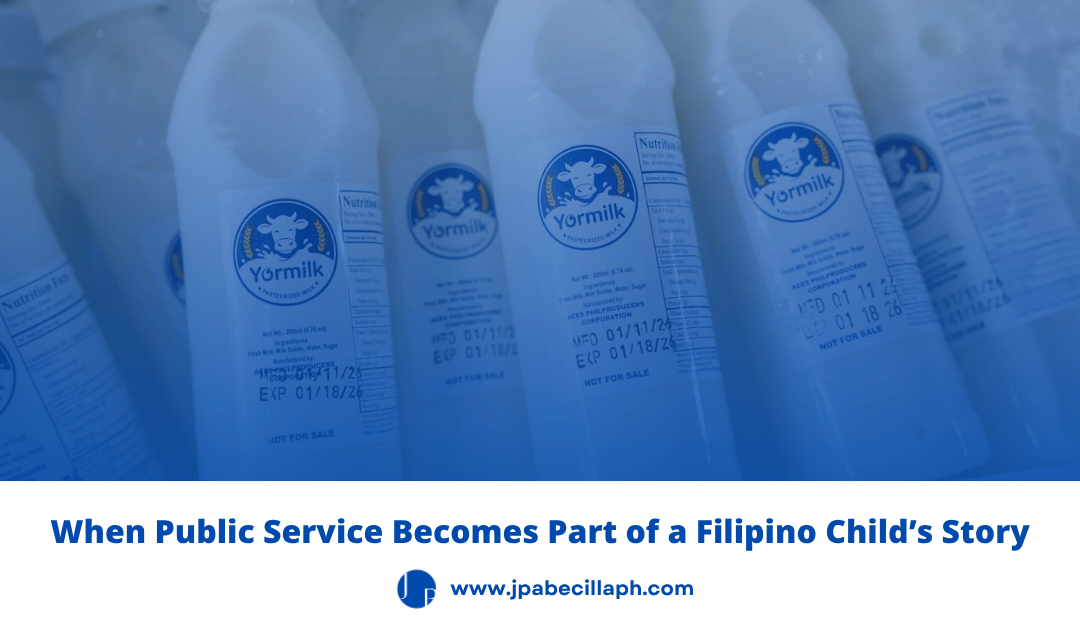
For many Filipino families, milk is ordinary.
It sits beside coffee, rice and canned goods on supermarket shelves. Parents remind children to finish their glass before school. Generations of Filipinos grew up hearing that milk would make them taller and their bones stronger.
But there is another Filipino family standing in the same grocery aisle.
The budget is limited.
Rice comes first. Then ulam. Transportation has to be considered. There may be electricity and water bills waiting at home. Someone might need medicine. School expenses are coming.
And when everything is added together, milk becomes something the family knows the child needs—but cannot always afford.
It is within that reality that I believe the conversation around Manila’s “Yormilk: Kaagapay ng Batang Maynila sa Paglaki” should begin.
Not with the politician whose nickname appears in its name. Not with political colours. Not even with branding.
Begin with the child who needs the milk.
Behind the Clever Name Is an Uncomfortable Number
When I wrote my Facebook commentary, “Yormilk: Personal Branding o Public Service?” two days ago, much of the online debate revolved around the program’s name.
Was “Yormilk,” derived from Mayor Isko Moreno’s familiar Yorme moniker, clever communication?
Or was it another example of a Filipino politician attaching personal branding to a taxpayer-funded government program?
That is a legitimate question.
Public money belongs to the public. Government programs should never be treated as personal gifts from elected officials, and Filipinos have every right to question whether political personalities are using taxpayer-funded projects to strengthen their own brands.
But while people argued about the name, another number deserved our attention: 1,593.
According to data from the Manila Department of Social Welfare cited when the program launched, 1,593 children enrolled in the city’s Child Development Centers were classified as wasted or severely wasted.
Those aren’t marketing numbers. They represent children experiencing acute malnutrition in the capital city of the Philippines. And suddenly the branding debate becomes much smaller.
What Does Malnutrition Look Like in an Ordinary Filipino Home?
Malnutrition does not always announce itself dramatically.
Sometimes it begins with decisions made quietly inside a household.
Ano ang bibilhin natin ngayong linggo?
Rice or milk? Baon or vitamins? Transportation to work or more nutritious food?
A parent may understand perfectly well what a child needs and still be unable to provide everything.
That distinction matters.
Poverty should not automatically be interpreted as parental neglect. For many Filipino families, the problem isn’t that parents don’t understand nutrition.
The problem is that good nutrition costs money.
Milk is a perfect example.
When money becomes tight, families naturally prioritise food that immediately satisfies hunger. A hungry child needs to feel full today, even when the cheaper option may not provide all the nutrients needed for healthy development tomorrow.
This is where a feeding program stops being an abstract government project. It enters the kitchen of an ordinary Filipino family.
21,651 Children, Three Times a Week
The initial Yormilk program covered 21,651 preschool children enrolled in Manila’s public day care system.
The plan was straightforward: provide fresh milk three times a week for 90 days, distributed through Child Development Centers across hundreds of Manila barangays.
There was nothing revolutionary about milk. Perhaps that is precisely the point.
Some of the most meaningful public interventions are not glamorous. A child does not need a government program to trend. A child needs it to arrive.
Monday.
Wednesday.
Friday.
Again and again.
Because the true test of public service isn’t the launch ceremony. It is whether the service still reaches people when the cameras are gone.
But What About the Name?
We shouldn’t avoid the criticism.
Filipinos have spent decades seeing politicians’ names and faces attached to projects funded not by politicians themselves but by taxpayers.
Waiting sheds. Ambulances. School supplies. Food packs. Infrastructure. Government assistance.
That history explains why a name such as “Yormilk” immediately triggers suspicion.
Critics have a point when they ask:
Why should a taxpayer-funded program carry branding associated with an elected official?
Wouldn’t a neutral institutional name better reinforce the idea that government assistance is a right and public service, rather than a politician’s personal generosity?
Those are healthy democratic questions.
My original argument, however, approached the issue from another direction.
As someone working in branding and marketing, I also understand the value of recall. Public communication has to reach ordinary people.
A program implemented across hundreds of barangays needs a name parents remember, barangay workers can communicate, and communities immediately recognise.
That’s why I initially argued that Yormilk could function as a mnemonic.
But perhaps both sides can be right.
A name can be effective communication and still deserve scrutiny because of its political association.
The better question, then, isn’t simply whether the branding is good or bad.
It’s whether the branding serves the program or whether the program serves the branding.
There is only one reliable way to answer that: Look at what happens after the publicity.
There Is Another Filipino in This Story: The Farmer
The milk also connects Manila children to another community many kilometres away.
Filipino dairy farmers.
The city chose locally produced fresh milk and coordinated with national agencies and partner cooperatives for the program. That creates another dimension often lost in political arguments.
A public nutrition program can potentially address two needs simultaneously: children who need better nutrition and Filipino farmers who need reliable demand for what they produce.
A bottle of milk therefore carries more than nutrition.
Somewhere before it reaches a preschooler in Tondo, somebody has to raise the animal, produce the milk, process it, transport it, inspect it and deliver it.
That is a Filipino story too.
The child and the farmer may never meet. But public policy can connect their lives.
From Nutribun to Yormilk
Government feeding programs also occupy a familiar place in Philippine memory.
Ask Filipinos from different generations about school nutrition and you’ll hear different names.
Some remember Nutribun. Others remember school feeding programs, powdered milk or meals distributed through public schools.
Today’s children may remember something else entirely. Programs change names. Administrations change. Politicians change.
The basic problem remains stubbornly familiar: How do we make sure a Filipino child has enough nutritious food to grow?
Perhaps that is why arguments about branding, while important, should never become bigger than the problem the branding is supposed to represent.
Because childhood does not wait for politics.
A three-year-old experiencing malnutrition today cannot postpone growing until the next administration.
The body is developing now. The brain is developing now. The opportunity to intervene is now.
Results Must Speak Louder Than Hashtags
I said, “Results speak louder than hashtags.”
I would add something to it: Results must also speak louder than politicians.
If Yormilk succeeds, success should not ultimately belong to Isko Moreno.
It should belong to the children whose nutritional health improves, the parents who receive some relief from household expenses, the child development workers who implement the program, the health workers who monitor children, the farmers who supply the milk and the taxpayers who funded it.
And if it fails, the public deserves to know that too. That is what accountability should look like.
Not blind praise. Not automatic outrage.
Evidence.
Did the wasted and severely wasted children improve? Did attendance improve? Did nutritional indicators change? Was the money spent efficiently? Did Filipino farmers benefit? Can the program continue?
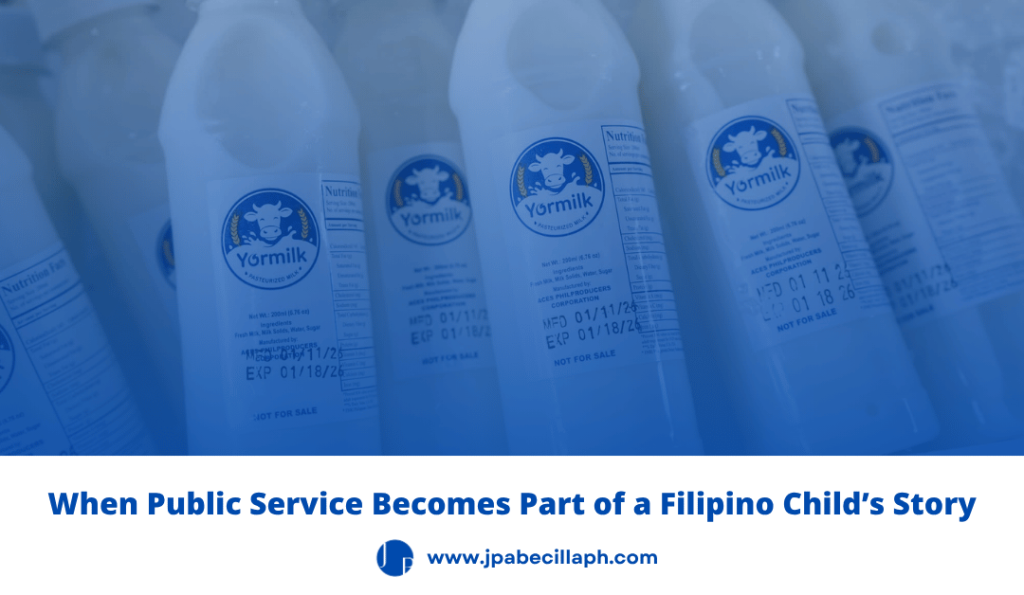
Those questions are more important than whether we like the name printed on the bottle.
The Next Great Filipino Story May Start Small
We often imagine great Filipino stories as extraordinary stories.
Heroes. Historic victories. Massive achievements. People overcoming impossible odds.
But sometimes progress looks much smaller.
It looks like a mother no longer having to choose between milk and another household necessity that week. It looks like a child walking into a day care center and receiving something his family may struggle to buy regularly. It looks like a farmer knowing there will be a buyer for fresh local milk. It looks like a child development worker checking whether a preschooler is finally gaining weight.
None of those moments will necessarily become viral.
But together they tell us something about the Philippines we are trying to build.
A country where public service is not measured by how loudly a politician’s name is promoted, but by whether an ordinary Filipino’s life becomes measurably better.
A country where taxpayers understand that government assistance is not a gift from politicians. It is public money being returned to public service.
And a country where a child’s opportunity to grow healthy is not determined entirely by how much money his or her parents have left after buying rice and paying the bills.
So, is Yormilk personal branding or public service?
Maybe we asked the question too early.
A clever name can get people’s attention. A launch can generate headlines. A hashtag can trend.
But none of those can nourish a child.
Only the work can do that.
And when the political personalities, viral arguments and clever branding eventually disappear, one measure should remain: Did the children grow healthier?
Because politicians come and go. Childhood does not come twice.
This article expands on JP Abecilla’s Facebook live video and written commentary, “Yormilk: Personal Branding o Public Service?” and incorporates subsequent publicly reported developments in Manila’s milk-feeding program.